Provincial Law Changes Fueling Custom Poker Bot Designs for Canadian Tournament Circuits
Mara Lange · Oct 20, 2026
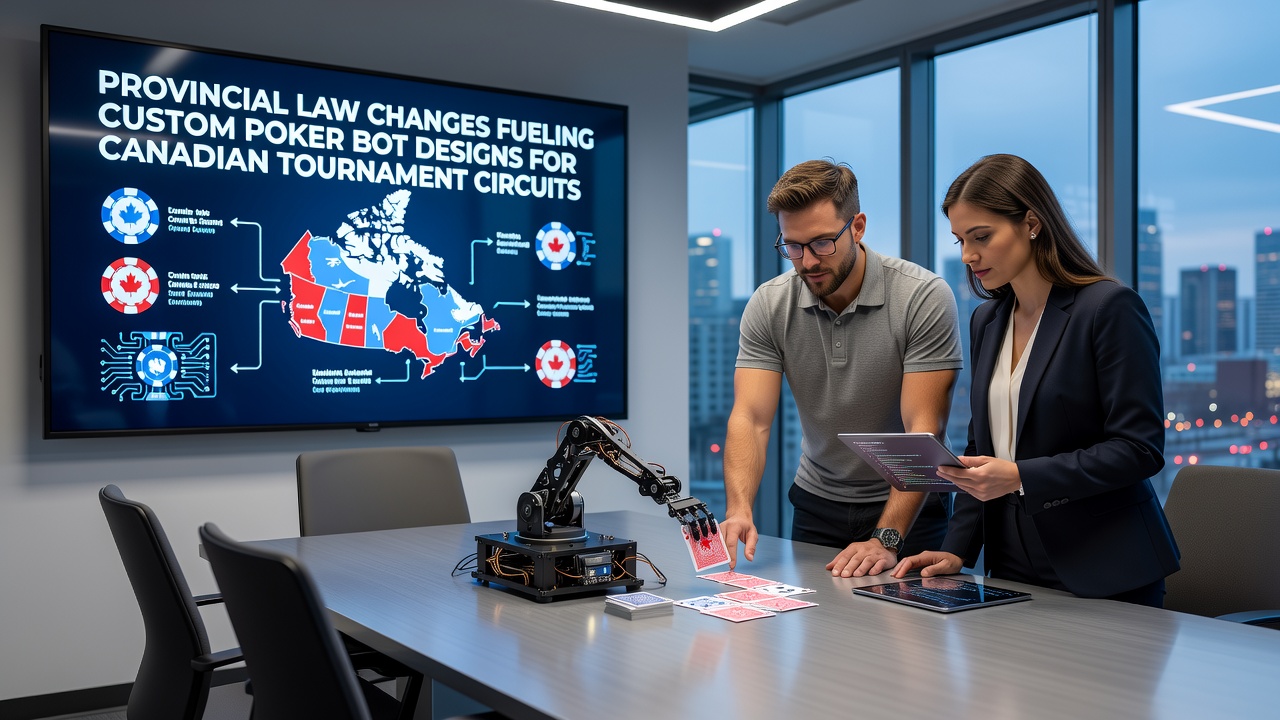
Provincial Law Changes Fueling Custom Poker Bot Designs for Canadian Tournament Circuits
Provincial law changes across Canada have prompted software developers to build specialized poker bots tailored to regional tournament requirements, and these adaptations address variations in licensing, player verification, and game mechanics that differ from one province to another. Data from industry reports shows that adjustments in digital poker offerings have accelerated since 2024, with developers focusing on modular code structures that allow quick reconfiguration for each jurisdiction's rules.
Shifting Regulatory Landscapes Across Provinces
Ontario's framework under the Alcohol and Gaming Commission of Ontario established new standards for online tournament platforms in 2025, while British Columbia and Alberta introduced parallel updates that emphasize real-time monitoring of automated play. Researchers at the University of Calgary documented how these policies require bots to incorporate province-specific filters for hand histories and betting patterns, ensuring that automated systems align with local definitions of skill-based play versus chance elements. Experts have observed that such requirements drive the creation of custom algorithms rather than off-the-shelf solutions, because each set of rules demands distinct handling of multi-table operations and payout structures.
Quebec's gaming authority implemented additional verification layers in early 2026 that affect bot deployment in live-streamed events, and these measures connect directly to broader efforts at maintaining competitive integrity across circuits. Observers note that developers respond by embedding adaptive neural networks capable of switching compliance modes without restarting sessions, which reduces downtime during multi-province tournament series. Figures from recent analyses indicate that custom bot usage in Canadian circuits rose notably between 2024 and 2026, coinciding with these layered regulatory shifts.
Technical Adaptations in Bot Development
Developers integrate province-specific modules for elements like rake calculations, blind structures, and anti-collusion checks, and these components activate based on geolocation data tied to tournament registration. One study revealed that teams working on bots for circuits spanning multiple provinces often use containerized architectures, allowing isolated updates when a single jurisdiction revises its statutes. This approach supports continuous operation in environments where laws evolve at different rates, while maintaining synchronization with central tournament servers.
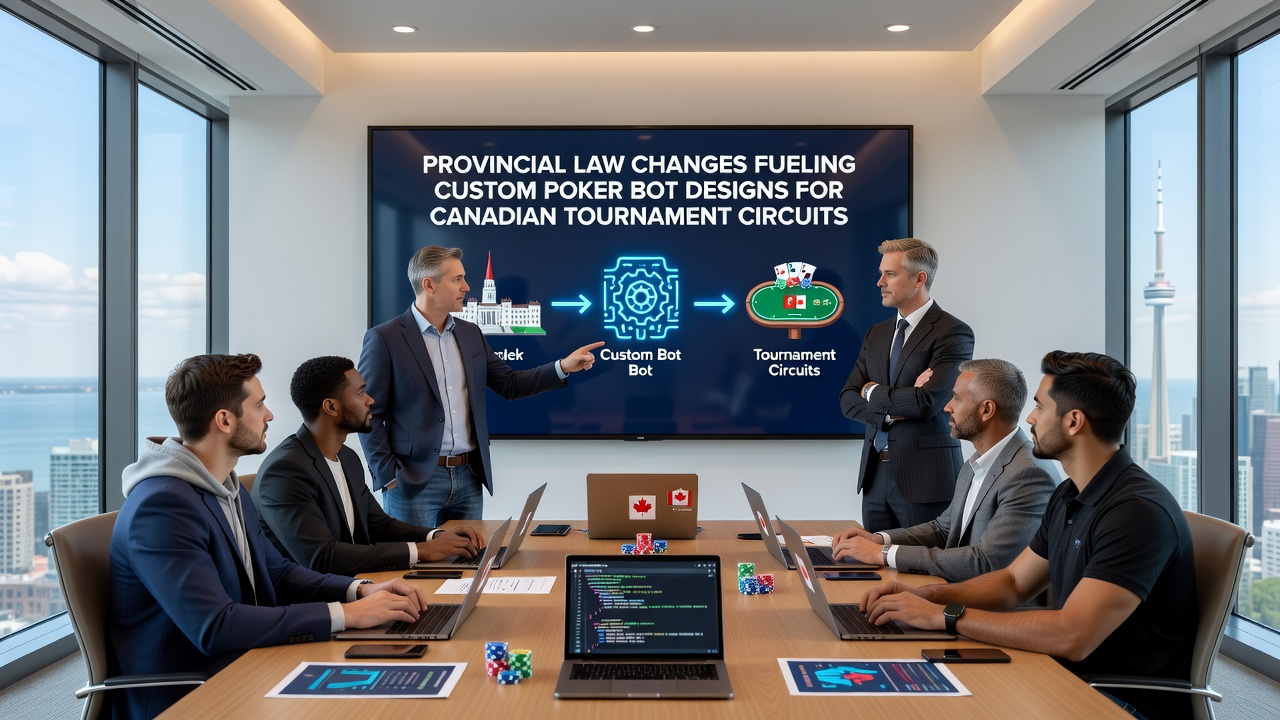
Custom designs also address October 2026 updates expected in several provinces regarding data retention for automated players, and these forthcoming rules require enhanced logging features that capture decision trees at granular levels. Teams incorporate encryption protocols that vary by province to meet differing privacy thresholds, yet the core decision-making engine remains unified across deployments. Data shows that such engineering choices stem from the need to navigate overlapping federal and provincial guidelines without disrupting live events.
Impact on Tournament Circuits and Participation
Canadian tournament circuits have incorporated these adapted bots into qualifying rounds and satellite events, where automated entries help scale participation while adhering to each host province's entry criteria. Organizers coordinate with developers to test bot compliance ahead of major series, ensuring that features like auto-fold thresholds and bet-sizing logic match local expectations. Reports from circuit operators highlight increased registration volumes in provinces that clarified automated play rules, as clearer guidelines reduce uncertainty for both human and bot participants.
Industry organizations tracking these developments point to collaborations between software firms and provincial bodies that produce standardized testing suites, and these suites verify bot behavior against current statutes before deployment. The reality is that circuits operating across borders benefit when bots can toggle between rule sets seamlessly, supporting consistent play quality regardless of venue location.
Conclusion
Provincial law changes continue to shape the evolution of custom poker bot designs for Canadian tournament circuits, with developers responding through modular, jurisdiction-aware software that meets evolving compliance demands. Evidence from regulatory filings and technical studies indicates sustained innovation in this area as provinces refine their approaches into late 2026 and beyond, supporting the operational needs of expanding circuits while preserving the structured environment required for fair competition.